
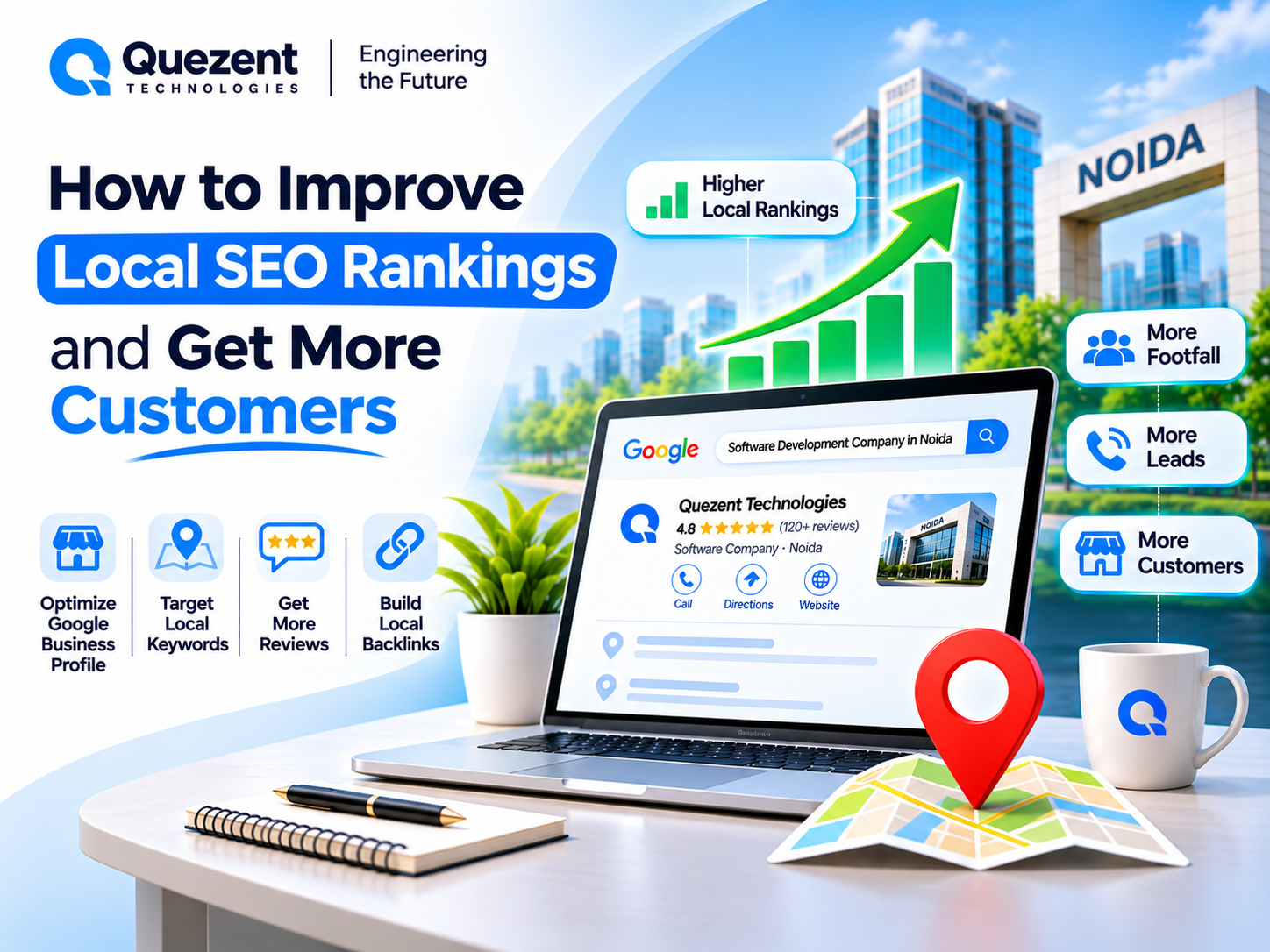
Why Local SEO Matters for Businesses Today
When customers search for a nearby restaurant, clinic, repair service, or professional business, Google may display local results alongside a map. These results help people compare businesses based on location, relevance, reviews, and available information.
Local Search Engine Optimization (Local SEO) helps eligible businesses improve their visibility in location-based search results, including Google Maps and Google's local results.
For businesses operating in competitive markets, local seo services can help improve business information, strengthen location-specific website content, and make it easier for potential customers to find relevant services.
Quezent Technologies provides digital marketing solutions for businesses looking to improve their online presence through technical SEO, content optimization, and local search strategies.
This guide explains how Local SEO works, what services are typically included, how pricing is determined, and what businesses should consider before hiring a provider.
Who Should Invest in Local SEO?
Local SEO is particularly relevant for businesses that serve customers at a physical location or within a defined service area.
Examples include:
-
Restaurants, cafes, and retail stores.
-
Clinics, dental practices, and healthcare providers.
-
Real estate agencies and property consultants.
-
Home repair and maintenance businesses.
-
Educational institutes and training centres.
-
Professional service providers operating in specific cities.
Businesses without an eligible customer-facing location or in-person service model should evaluate whether Google Business Profile is appropriate for them.
What Do Professional Local SEO Services Include?
A successful Local SEO strategy requires more than adding a business name to Google Maps.
1. Google Business Profile Optimization
An eligible, verified Google Business Profile helps businesses manage how their information appears on Google Search and Maps.
Important optimization activities include:
-
Selecting accurate primary and secondary business categories.
-
Maintaining correct business names, addresses, and phone numbers.
-
Updating business hours and holiday schedules.
-
Adding relevant services, products, and photographs.
-
Keeping business descriptions accurate.
-
Monitoring profile performance and customer interactions.
Businesses should avoid adding unnecessary keywords to their official business names or creating profiles for locations that do not meet Google's eligibility requirements.
2. Local Keyword Research
Local keyword research identifies search queries that combine a service or product with geographic intent.
For example, a customer might search for an electrician in Noida or a dental clinic in Ghaziabad.
These searches can help businesses understand which services and locations deserve dedicated website content.
Keyword targeting should reflect actual business operations and service coverage.
3. Location-Based Website Optimization
A business website should clearly explain what services are offered and where they are available.
Local website optimization may include:
-
Creating useful location-specific service pages.
-
Improving page titles and headings.
-
Adding accurate contact and service-area information.
-
Strengthening internal links between relevant pages.
-
Using appropriate LocalBusiness structured data where applicable.
-
Improving mobile usability and page performance.
Avoid creating dozens of nearly identical city pages that provide little additional value.
4. Business Listings and Citation Management
Business citations are references to a company's name, address, phone number, or other identifying details on relevant websites.
Accurate listings can help customers find reliable business information.
Businesses should prioritize legitimate directories and industry platforms rather than submitting their information to hundreds of unrelated websites.
5. Customer Review Management
Customer reviews can influence purchasing decisions and contribute to local prominence.
A responsible review strategy involves requesting genuine feedback, responding professionally, and addressing customer concerns.
Businesses should never purchase fake reviews or offer incentives in exchange for positive ratings.
6. Local Content and Link Building
Location-relevant content can help businesses answer questions from customers in their service areas.
Examples include local service guides, frequently asked questions, and useful information about service availability.
Relevant local partnerships and editorial mentions may also contribute to a business's online presence.
What Affects Google Maps Rankings?
Google describes three main factors for local ranking:
-
Relevance: How closely a business matches what someone is searching for.
-
Distance: How far the business is from the location used in the search.
-
Prominence: How well-known or established the business appears to be.
Businesses can improve the accuracy and usefulness of their online information, but they cannot directly control every ranking factor.
No provider can guarantee the first position on Google Maps.
How Much Does Local SEO Cost in India?
The cost of hiring a local seo company in india depends on the number of business locations, competition, website condition, and required services.
Common cost factors include:
-
Number of eligible Google Business Profiles.
-
Local keyword research and competitor analysis.
-
Website optimization and technical fixes.
-
Creation or improvement of location-specific pages.
-
Citation corrections and listing management.
-
Review management support.
-
Reporting and ongoing performance monitoring.
A single-location business generally has different requirements from a company managing several legitimate branches.
Businesses should compare proposals based on deliverables, responsibilities, and reporting rather than price alone.
Local SEO Implementation Timeline
Local SEO is an ongoing process. Improvements may become visible at different times depending on competition, website history, and the quality of existing business information.
A practical initial roadmap includes:
-
Week 1–2: Local SEO Audit — Review Google Business Profile eligibility, listing accuracy, local keywords, website issues, and competitors.
-
Week 3–4: Profile and Website Optimization — Improve business information, relevant service pages, technical elements, and internal linking.
-
Month 2: Content and Citation Improvements — Address inaccurate listings, develop useful local content, and improve customer review processes.
-
Month 3 Onward: Monitoring and Refinement — Evaluate local visibility, website visits, calls, and other meaningful customer actions.
These periods describe activities, not guaranteed ranking milestones.
How to Choose a Local SEO Agency
Before hiring a local seo agency, evaluate its understanding of local search requirements and business eligibility.
Ask the following questions:
-
Will you audit our existing Google Business Profile and website?
-
How will you identify relevant local search queries?
-
Do you follow Google's business representation guidelines?
-
How will you manage multiple legitimate business locations?
-
What approach do you use for customer reviews and citations?
-
Which performance metrics will you report?
-
Will our business retain ownership and management access to its profiles?
A suitable provider should explain the work involved and set realistic expectations.
How Can Businesses Measure Local SEO Performance?
Local SEO should be evaluated using more than rankings for a handful of keywords.
Useful indicators include:
-
Google Business Profile calls and website interactions.
-
Website clicks from local search queries.
-
Direction requests, where applicable.
-
Organic enquiries from location-specific pages.
-
Search impressions and clicks in Google Search Console.
-
Conversions generated by relevant local visitors.
Results should be compared over meaningful periods, accounting for seasonal demand and changes in business activity.